
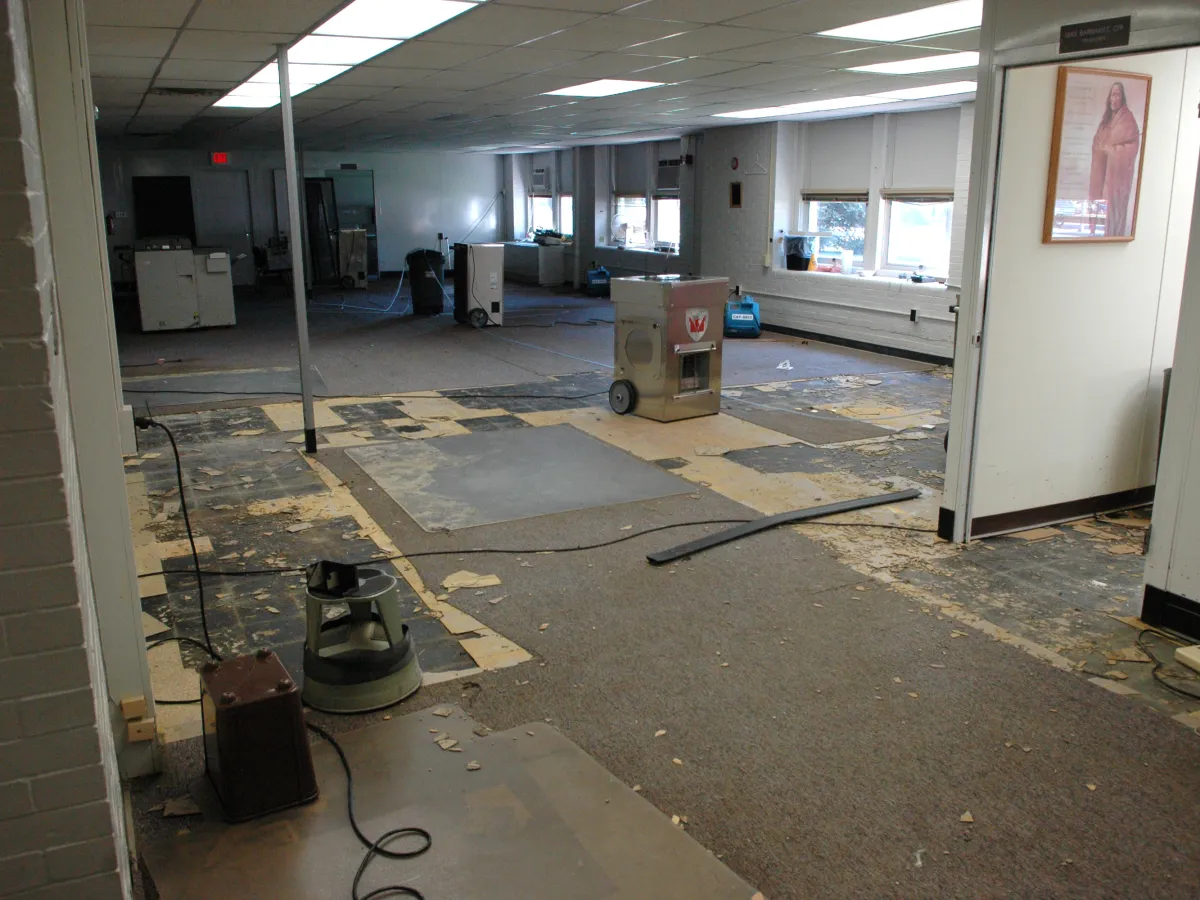
It feels dry, so it must be dry
A few days after a leak, the carpet feels dry, the walls look fine, and it's tempting to put the room back together. But wall cavities, subfloors, and the bottoms of drywall can still be holding water long after the surface feels dry to the touch.
That trapped moisture is what turns into mildew, warped floors, peeling paint, and a musty smell that won't go away. Often it doesn't show up until weeks after the repairs are done.
Drying what you can't see
Structural drying goes past the surface. The goal is to pull moisture out of the materials themselves, including framing, subfloors, and the spaces inside walls, not just the air in the room.
Drying is confirmed with moisture readings, not by touch. The work isn't finished when the room looks dry. It's finished when the materials are actually dry.
Avoiding the repair that has to be redone
Closing up wet walls or laying new flooring over a damp subfloor is one of the most expensive mistakes after a water loss. The moisture has nowhere to go, and the damage comes back, often worse than before.
Drying the structure properly before repairs means the work only has to be done once. While it happens, your belongings are cleaned and stored, so they don't come back into a house that's still damp.
Frequently Asked Questions
How long does structural drying take?
It depends on how much water there was, how long it sat, and what materials got wet. Drying usually takes several days, and dense materials like hardwood or plaster can take longer. Drying is checked with moisture readings along the way, so it's finished when the materials are actually dry, not on a fixed schedule.
Can't I just open the windows and run fans?
Fans and fresh air help the surface dry, but they rarely reach the moisture inside walls and under floors. On humid days, opening windows can even add moisture. Household fans also won't tell you when the materials are actually dry, which is what matters for preventing mold.
Will my walls have to be torn out?
Not always. Many walls can be dried in place, especially if the water was clean and the drying starts quickly. Drywall that soaked up contaminated water, or that stayed wet too long, may need to be removed. Each area is assessed before anything is torn out.
What happens to my belongings while the house dries?
Your belongings are packed out, logged on an inventory, cleaned, and stored securely while the structure dries and is repaired. That protects them from humidity and gives the drying process room to work. Everything comes back once your home is ready.
How do you know when everything is dry?
Moisture levels in the wet materials are measured and compared against dry, unaffected areas of your home. When the readings match, the materials are dry. That's a much more reliable test than how a wall or floor feels to the touch.
Locally owned and operated by Jeff Sitz and Brian Rick from our Akron office at 1477 Copley Rd.