
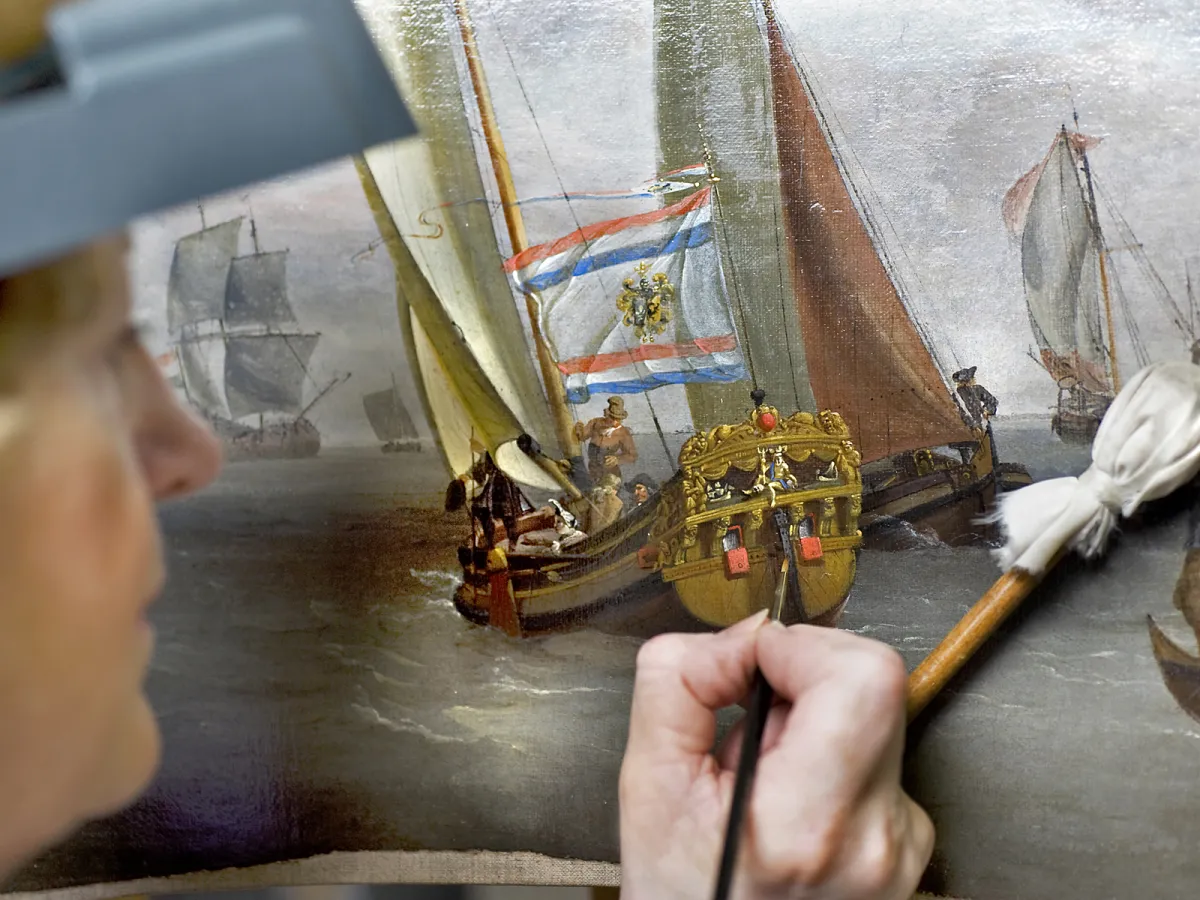
I thought the painting was ruined
After a fire or flood, a painting covered in a gray film or a print with water stains along the edge can look like a total loss. Plenty of people take it off the wall and set it by the curb without a second thought.
Most of the time, the damage sits on the surface: soot, smoke residue, or water marks. A piece that looks hopeless can often be cleaned and restored, and you won't know until someone who understands art damage takes a careful look.
What to do with your art right after a fire or flood
The instinct is to grab a cloth and wipe the soot away. On a painting or print, that usually smears the residue deeper into the paint, the canvas texture, or the paper. Leave the surface alone.
If artwork got wet, move it away from the water if you can do that safely. Don't try to dry it with heat or press it flat. Let our Akron team pack it out with your other belongings, where it's logged on your inventory before anything else happens.
Every piece is handled by what it's made of
An oil painting, a watercolor, and a framed print react to smoke and water in completely different ways. Art restoration is part of CRDN's services, and the method for each piece depends on its material, not a one-size-fits-all cleaning.
That's why your artwork is assessed before any work begins. You'll know which pieces can be restored and which can't, and anything that can't be saved is documented on your claim.
Frequently Asked Questions
Can smoke damaged paintings be restored?
Often, yes. Smoke and soot usually settle on the surface of a painting rather than destroying it, and that residue can often be removed with methods matched to the paint and canvas. How well a piece comes back depends on its materials and how heavy the exposure was. Every piece is assessed first, and anything that can't be restored is documented on your claim.
Is it worth restoring a piece that isn't valuable?
Value isn't only about price. A print from a trip or a painting a friend made you can mean more than anything you could buy to replace it. Restoring artwork also often costs less than replacing it, which is why insurance companies support it. If a piece can't be saved, it's documented so it stays on your claim.
Does insurance cover artwork restoration?
Artwork is usually covered under the contents portion of a homeowners claim, though your own policy decides what's included. High-value pieces are sometimes listed separately on a fine art rider, so check whether any of yours are. Our claim specialists work directly with your adjuster, so you aren't left sorting out each piece on your own.
What should I do with wet artwork?
Move it away from the water if you can do that safely, and keep it somewhere it won't get wetter. Don't wipe it, don't dry it with a hair dryer or heater, and don't press it flat. Wet paper and canvas can grow mold within days, so the sooner it's packed out and assessed, the more likely it can be saved.
Where does my artwork go while it's being restored?
Your artwork is packed out with your other belongings and logged on the same inventory. After it's restored, it's stored securely until your home is ready, so it isn't sitting in a damaged house during repairs. You and your adjuster can see where each piece stands the whole time.
What should I have ready for high-value pieces?
If you have appraisals, receipts, or photos of valuable artwork, set them aside for your adjuster. Pieces listed on a fine art rider are often handled separately on a claim, so check your policy for any listed items.
Locally owned and operated by Jeff Sitz and Brian Rick from our Akron office at 1477 Copley Rd.