I can't bring myself to throw out our things
Carrying your own ruined belongings to the curb is one of the hardest jobs after a fire or flood. Every bag holds something you remember buying, using, or being given. A lot of people put it off, and the smell and mess keep spreading while it sits.
Our trashout crew removes what can't be saved, so you don't have to handle it yourself. Anything that can be restored is set aside first, so nothing that could have been saved ends up in the dumpster by mistake.
Throwing things away before the adjuster sees them
It's natural to want the mess gone as fast as possible. But anything that goes to the curb without a record can be hard to claim later. Your insurance company needs proof of what you lost before it can pay you for it, and memory is a weak list after a disaster.
Each item we remove is documented as it goes, so your adjuster has a clear record of what was lost. You don't have to photograph every ruined shirt and chair yourself or try to rebuild a list from memory months later.
The city won't take all this at the curb
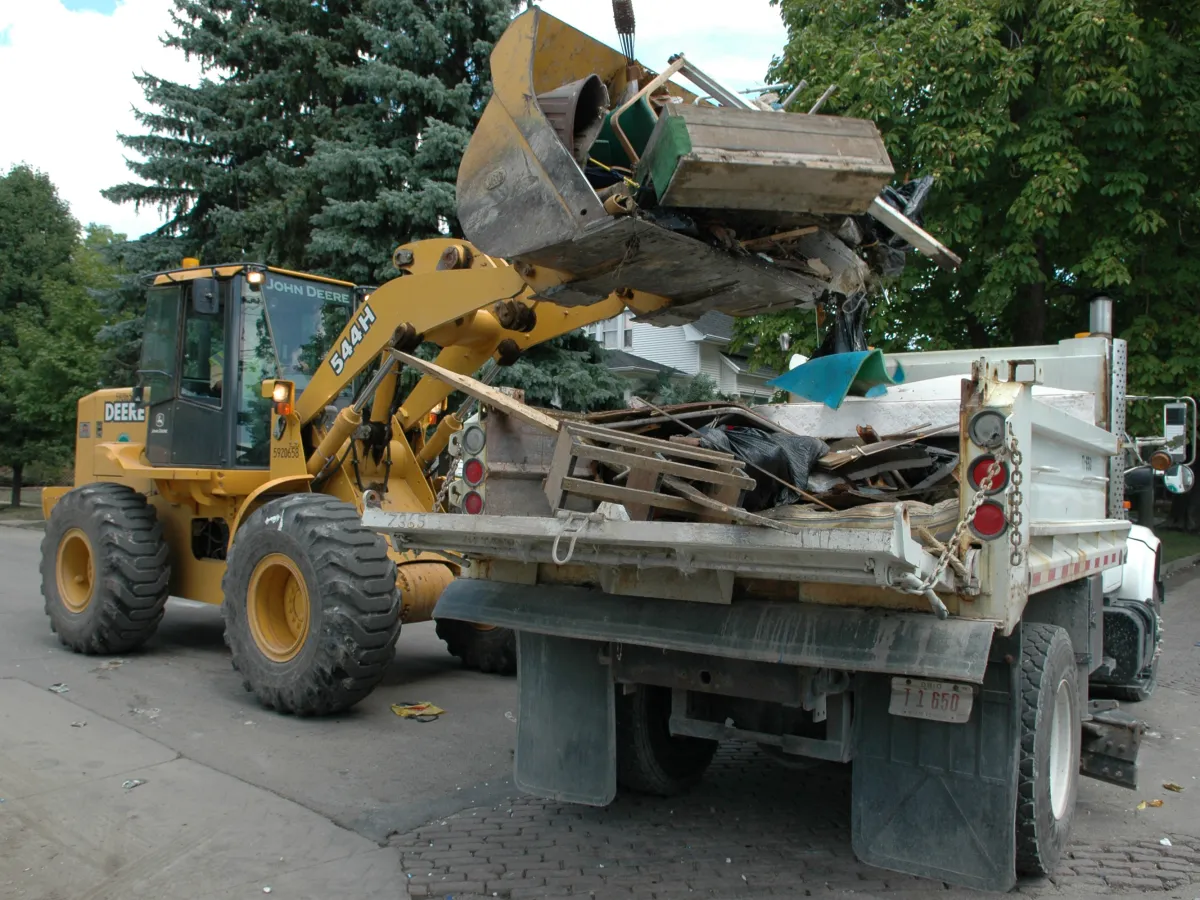
After a big loss, there is far more debris than a trash cart can hold. In Akron, each household gets only three free special bulk pickups a year, scheduled ahead of time, and the city won't take drywall, plaster, or other construction debris at all.
A fire or flood can use up a year's worth of pickups in one weekend and still leave piles sitting in your yard. Our crew hauls the debris from your loss away for you, so you're not stuck figuring out where it all goes while you're trying to get your life back in order.
Clearing the house so repairs can start
Repairs can't really begin while rooms are still full of soaked furniture, burned boxes, and debris. Clearing out what can't be saved is what lets cleaning and rebuilding get underway, and the sooner that happens, the sooner you're back home.
Because restoration and removal are handled by the same company, the work happens in a sensible order. What can be saved is packed out and inventoried. What can't be saved is removed and documented. The house is left clear for the next step.
Frequently Asked Questions
Will you throw away anything that could be saved?
No. Anything that can be restored is set aside first and packed out with your other belongings. Only what can't be saved is removed.
Will my adjuster have a record of what was thrown out?
Yes. Each item is documented as it's removed, so your adjuster has a clear record of what was lost. You don't have to photograph every ruined item yourself or rebuild a list from memory.
Should I start clearing things out myself?
It's better to wait. Anything that goes to the curb without a record can be hard to claim later, and your adjuster may need to see damaged items first.
Why can't the city just pick it up?
In Akron, each home gets three Special Bulk Volume pickups a year, and you have to call ahead to schedule them. The city won't take drywall, plaster, roofing, or other construction and demolition materials at all. After a fire or flood, there's usually far more debris than that.
Is debris removal covered by insurance?
It is often part of a homeowners claim, though your own policy decides what's included. Because every item is documented as it's removed, the record supports your claim either way.
Locally owned and operated by Jeff Sitz and Brian Rick from our Akron office at 1477 Copley Rd.